The fastest way to maximize a kitchen remodel’s ROI is simple. Spend on the upgrades buyers notice first, cabinets, countertops, and appliances, and skip anything too personal or too expensive for your neighborhood. Small, smart changes almost always beat a full gut renovation when it comes to actual return.
A kitchen remodel is one of the few home projects that can pay for itself. But not every upgrade earns its keep. If you want to maximize a kitchen remodel’s ROI, you need a plan that balances cost, buyer appeal, and timing. This guide breaks down exactly where your money works hardest.
To maximize a kitchen remodel’s ROI, focus on minor upgrades over major overhauls. Cabinet refacing, new countertops, updated appliances, and fresh lighting deliver the strongest returns. Keep your total spend between 5 and 15 percent of your home’s value, choose neutral finishes, and avoid custom features that limit buyer appeal.
What’s a Good ROI for a Kitchen Remodel?
A good ROI on a kitchen remodel usually falls between 60 and 100 percent of what you spend, depending on the scope of the project. Smaller updates tend to recoup more of their cost than large scale renovations.
Minor Remodel vs. Major Remodel ROI
A minor kitchen remodel, think new countertops, refaced cabinets, and updated appliances, typically costs less and returns a higher share of that cost. A major remodel, with structural changes and high end finishes, costs far more but returns a smaller percentage. The gap exists because buyers reward function and freshness. They rarely pay extra for custom or luxury details that only match your personal taste.
How Location Affects Your Return
Your home’s location changes the math. Kitchen remodel ROI tends to run higher in strong housing markets like the Bay Area, where buyers compete for updated homes. Homeowners in Los Altos and similar markets often see returns above the national average, since local buyers expect move-in ready kitchens and are willing to pay for them. Local market conditions matter as much as the renovation itself.
A Real Kitchen Remodel ROI Example
Numbers make this easier to picture. Say you spend $25,000 on a minor kitchen remodel, new countertops, refaced cabinets, and updated appliances. If your home’s resale value increases by $19,000 as a result, your ROI works out to 76 percent. That means for every dollar you spend, you get back about 76 cents at resale, plus the daily benefit of a better kitchen while you live there. Compare that to a $70,000 full remodel that only adds $38,000 in resale value, an ROI of about 54 percent. The smaller project wins on paper, even though the total dollar return is lower.
How to Maximize a Kitchen Remodel’s ROI: Upgrade by Upgrade
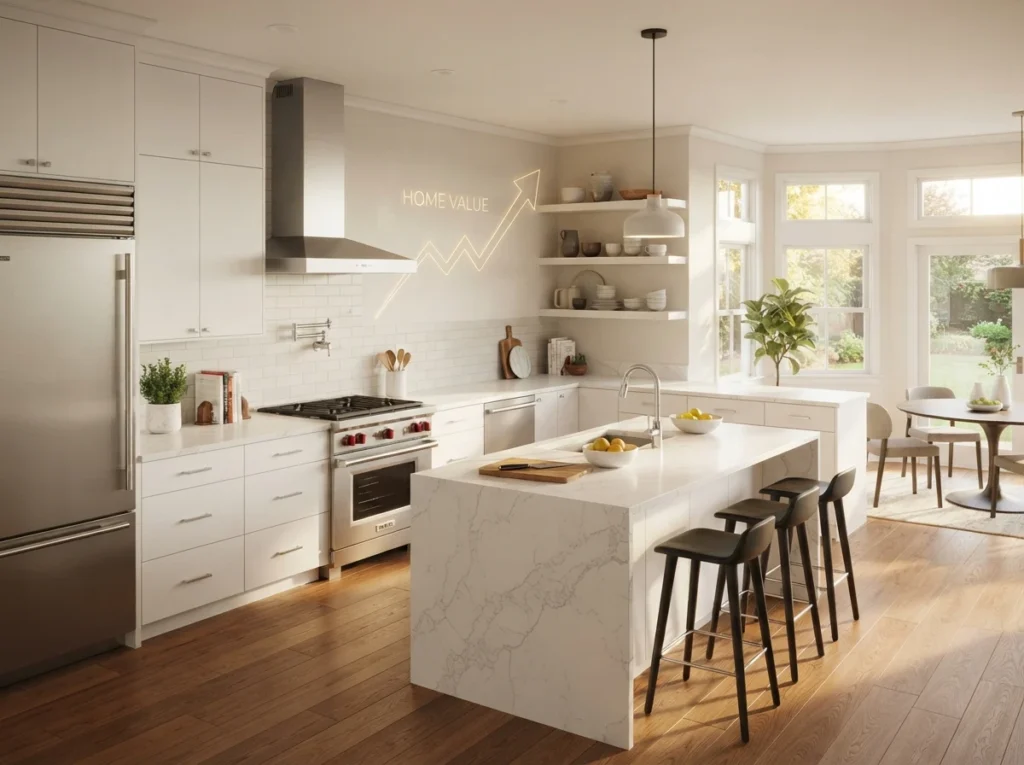
Once you understand the math, the next step is choosing upgrades that actually move the needle. Here’s where to put your budget if your goal is to maximize a kitchen remodel’s ROI.
Cabinet Refacing or Repainting
Cabinets set the tone for the whole kitchen. Refacing or repainting existing cabinet boxes costs far less than full replacement and still delivers a dramatic visual change. Stick to neutral tones like white, warm gray, or soft wood finishes. These colors age well and appeal to the widest range of buyers.
Countertop Upgrades
Quartz, granite, and butcher block countertops all offer strong value. Quartz holds up well and needs little maintenance, which buyers appreciate. Granite gives a natural, upscale look at a moderate price. Butcher block works well in farmhouse or transitional kitchens. Choose a material that fits your home’s overall style instead of chasing trends.
Energy Efficient Appliances
Buyers actively look for lower utility bills. ENERGY STAR certified appliances use less energy than standard models and signal a well maintained home. Stainless steel finishes remain the safest, most broadly appealing choice.
Lighting and Hardware
Lighting and hardware are small, affordable upgrades with an outsized impact. Under cabinet lighting brightens work areas and photographs well for listings. New cabinet pulls and faucets in matte black or brushed nickel instantly modernize a dated kitchen for very little cost.
Backsplash and Flooring
A simple subway tile or neutral mosaic backsplash protects your walls and adds polish without overwhelming the space. For flooring, durable options like luxury vinyl plank or hardwood hold value better than trendy or high maintenance materials.
Smart Storage and Layout Improvements
Pull out shelving, deep drawers, and better use of corner space make a kitchen feel larger without changing its footprint. Buyers respond strongly to storage, often more than they respond to finishes. Keep your existing layout when you can, since moving plumbing and electrical lines adds cost without adding much return.
Should You Remodel Now or Wait?
Timing changes your strategy. Your goals should guide how much you spend and which upgrades you choose.
If You’re Selling Within 12 Months
Focus only on upgrades with the fastest payback: cabinet refacing, countertops, hardware, and paint. Skip anything structural. A real estate agent familiar with your local market can confirm which updates buyers in your area actually expect.
If You Plan to Stay Long Term
You have more room to invest in features you’ll actually use, since you’ll enjoy the benefit for years before any resale conversation happens. Even then, staying close to neutral, timeless choices keeps your options open if your plans change later.
Budgeting Rules That Protect Your ROI
Smart budgeting protects your return before you spend a single dollar.
The 5 to 15 Percent Rule
A common budgeting guideline suggests spending between 5 and 15 percent of your home’s total value on a kitchen remodel. Going above that range makes it harder to recoup your costs, especially in a modest neighborhood.
Where Not to Overspend
Skip built in espresso machines, wine fridges, and other highly personalized features. These upgrades rarely appeal to the average buyer and can actually shrink your pool of interested buyers. Bold cabinet colors and unconventional layouts carry the same risk.
How 2026 Cabinet Tariffs Are Affecting Remodel Costs
Import tariffs on kitchen cabinets took effect in late 2025, and many homeowners are already feeling the impact in 2026. Higher cabinet prices push up total remodel costs, which can shrink your ROI if your budget doesn’t account for the change. Refacing or repainting existing cabinets, rather than replacing them, has become an even smarter way to control costs while still getting a fresh look.
Kitchen Remodel ROI vs. Other Renovation Projects
Kitchens remain one of the strongest performing rooms for return on investment, based on the Cost vs. Value data JLC Online publishes each year. Exterior projects like siding or garage door replacement sometimes edge out kitchens on pure percentage return, but a well planned kitchen remodel still delivers one of the best combinations of resale value and everyday livability in the home.
Common Mistakes That Lower Your Kitchen Remodel ROI
A few habits quietly erode returns. Overspending for your neighborhood is the biggest one, since a luxury kitchen in a modest home rarely earns back its full cost. Overly bold design choices narrow your buyer pool. Skipping permits on plumbing and electrical work creates problems that surface during inspection and can delay a sale. Poor DIY work often needs costly correction later, which erases any savings from doing it yourself.
Frequently Asked Questions
What is the average ROI on a kitchen remodel?
Most minor kitchen remodels return between 70 and 100 percent of their cost, based on JLC Online’s Cost vs. Value data. Major remodels typically return less, often between 50 and 60 percent.
How much does a new kitchen increase home value?
A kitchen remodel can add tens of thousands of dollars in resale value, depending on the scope of the project and your local market. Minor updates tend to add more value per dollar spent than large scale renovations.
Is it worth remodeling a kitchen before selling?
Yes, in most cases. An updated kitchen helps a home sell faster and often supports a higher asking price, especially when the rest of the home is in good condition.
Can small kitchen remodeling projects deliver a good ROI?
Yes. Small projects like cabinet refacing, new countertops, and updated lighting consistently outperform full remodels on a percentage return basis.
How much should I budget for unexpected expenses during a kitchen remodel?
Set aside about 10 percent of your total project budget for surprises. Older homes are more likely to reveal plumbing or electrical issues once work begins.
How can I improve the efficiency of my kitchen layout?
Keep your appliances arranged in a work triangle, with the stove, sink, and refrigerator close together. This reduces unnecessary movement and makes the space feel more functional.
Should I renovate my kitchen if I plan on selling soon?
Talk to a local real estate agent first. They can tell you whether your current kitchen already meets buyer expectations or whether an update will help your home compete.
How important is kitchen layout to resale value?
Layout matters as much as finishes. A kitchen that flows well, with enough counter space and a logical appliance arrangement, often outperforms a kitchen with expensive materials but a cramped or awkward design.
Final Takeaway
Maximizing a kitchen remodel’s ROI comes down to a few consistent habits: choose minor upgrades over major overhauls, keep your budget within 5 to 15 percent of your home’s value, and stick with neutral, timeless finishes. If you’re planning a kitchen remodel in the Los Altos area and want guidance on which upgrades fit your home and budget, our team can walk you through the options.